
Updated: June 2026
On this page
Natural health, in plain terms
For us, natural health is not about chasing miracle cures. It is about small, sensible choices — simpler products, fewer unnecessary ingredients, and old habits worth keeping — made consistently over time. We make no health claims for any herb or product on this page; we simply share the traditions and let you read more and decide for yourself.
This guide covers practical natural-health habits, herbal traditions, how to read a product label, and how to build a natural routine that lasts.
Walk into any high-street health shop and you can be forgiven for feeling lost. Shelves are stacked with bold promises, long ingredient lists and prices to match.
This guide steps back from all of that. It is a plain, honest starting point for anyone who wants to bring a few more natural choices into everyday life — without the hype, and without spending a fortune.
Think of it as the hub for our Natural health & herbal tips writing. From here you can branch off into the more detailed guides linked throughout, and into our wider Natural living guide when you are ready to look at the home around you too.
UK-made colloidal silver, in dark glass
Double-purified water — reverse osmosis, then distilled — with real silver. Made in the UK.
What we mean by natural health
“Natural” is a word that gets stretched a long way on packaging, so it is worth being clear about how we use it. We are not suggesting you swap your doctor for a cupboard of herbs.
Natural health, the way we mean it, sits alongside ordinary good sense: rest, water, movement, real food, and a healthy scepticism towards anything that promises the world.
What it does mean in practice is paying a bit more attention to what you bring into your routine and your home — choosing simpler formulations, reading labels properly, and keeping the things that have stood the test of time rather than the things shouting loudest this month.
Small daily habits worth keeping
The habits that last are almost always the small ones. You are far more likely to stick with a two-minute change than a grand overhaul.
A few that cost little or nothing:
- Start with water — a glass first thing, before anything else.
- Get daylight early — even ten minutes outside counts.
- Cook one extra meal from scratch each week, and build from there.
- Read the label before anything new comes into the house.
- Keep a tidy shelf of what you actually use, not a drawer of half-finished bottles.
None of this is revolutionary, and that is rather the point. For more swaps you can make a few at a time, see our guide to simple natural swaps to try at home.
Herbs and their traditional place
People have reached for herbs for as long as there have been people.
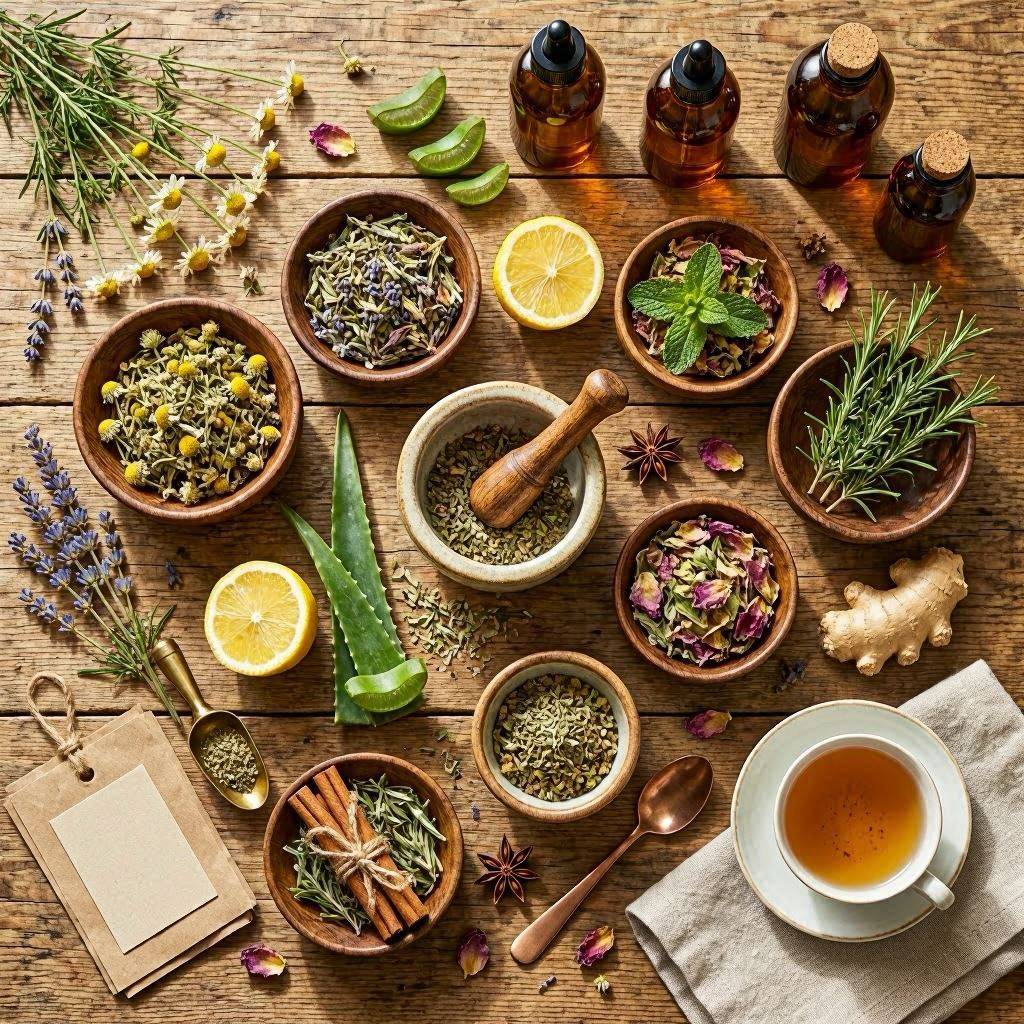
Across cultures and centuries, plants have been woven into food, ritual and daily life — chamomile and mint at the end of the day, rosemary and thyme in the kitchen, lavender by the bedside.
These are traditions, passed down and enjoyed, and that is how we talk about them: as folklore and heritage rather than as treatments.
We deliberately do not make health claims about any herb. What we will happily do is tell you the story — where a plant came from, how it was used, and the lore that grew up around it.
If that side of things interests you, our companion piece on herbs through history is a good next read.
Reading the label: what “natural” really means
Here is the uncomfortable truth: “natural” is not a tightly regulated word. A product can lean on it heavily while still carrying a long list of things you would not choose if you read them out loud.
The single most useful natural-health skill is not buying a particular brand — it is turning the bottle around and reading the back.
A short ingredient list, in plain language, is usually a good sign. So is a maker who is clear about what is in the bottle and where it was made.
We wrote a whole guide on the marketing words to watch for: what “natural” really means on a label.
Building a routine that sticks
Most natural-living plans fail for the same reason most plans fail: they ask for too much, too soon. The fix is to change one thing at a time and let it become automatic before adding the next.
Swap a single product, keep it for a month, and only then move on. Routines built this way tend to survive busy weeks, which is the only real test.
If you would like a simple framework for stacking these habits without burning out, our guide to building a natural-living routine that sticks walks through it step by step.
Where colloidal silver fits
Colloidal silver is one of the products people often ask us about when they are putting together a simpler, more natural cupboard. It has a long and genuinely fascinating history, which we cover in our complete colloidal silver guide and our story of silver.
What sets ours apart is the making, not grand claims. Most colloidal silver is made with water that has been through one purification step, if any.
We use two: first reverse osmosis, which forces the water through an ultra-fine membrane to strain out dissolved minerals and impurities, and then distillation on top of that — boiling it to vapour and re-condensing it so only the cleanest water carries through.
Two stages, every batch, before a single particle of silver goes in. Then we bottle in dark glass rather than plastic, to keep light off the contents.
It is made in the UK and sold for external use only. You can see the full range in the shop.
Common questions
Do I need to buy lots of supplements to live more naturally?
No. Natural living is mostly about everyday choices — what you eat, how you rest, and reading labels — not about filling a shelf with products.
Start with habits that cost nothing and add a considered product only when it earns its place.
Are herbal traditions the same as medical advice?
No, and we are careful not to blur the two. We share the history and folklore around herbs because it is interesting and part of our heritage.
For anything to do with your health, speak to a qualified professional.
Where do I start if I only change one thing?
Read the back of the next product you are about to buy. That single habit quietly improves nearly every other choice that follows.
Buy more, save more
Build your own pack and save up to 15%, or pick a ready-made bundle.
Secure checkout · Made in the UK
Why buy from Health is a Choice
We make our colloidal silver in the UK, the way we would want it for our own family. We don’t purify our water once — we do it twice.
It is first cleaned by reverse osmosis, then distilled on top of that, before we suspend real silver in it and bottle it in dark glass — never plastic.
- Made and bottled in the UK
- Bottled in dark glass, never plastic
- Double-purified water: reverse osmosis, then distilled
- Available in 10, 100 and 200 ppm
- 100ml dropper, 100ml spray and 500ml refill
- Free Royal Mail Tracked 48 on every order
Related guides
- Simple natural swaps to try at home
- Herbs through history: traditional uses and folklore
- Building a natural-living routine that sticks
- What “natural” really means on a label
Made in the UK · Dark glass, never plastic · Free Royal Mail Tracked 48
Last updated: June 2026
This article is for general information only and is not medical advice. We make no medical claims. If you have a health concern, please speak to your GP or pharmacist.